


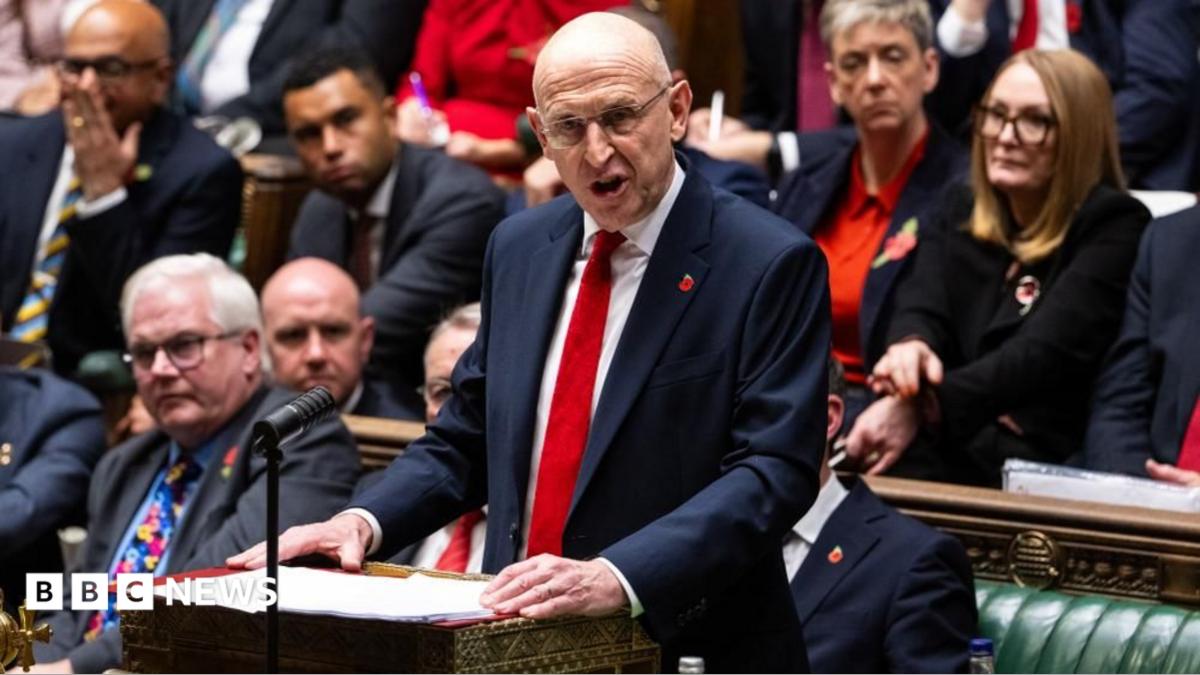
ZONAUTARA.com – Millions of households in the UK will receive £100 to assist with the increasing energy bills, funded by a tax on bank profits, as announced by Chancellor John Healey in his inaugural Budget. The chancellor emphasized the need to provide relief for families facing financial pressure and aspiration for the future amid the UK’s economic struggles due to “global economic storms”.
Aside from the energy assistance, Healey also announced tax incentives to support high street businesses. However, major decisions related to defense spending and welfare were deferred to the following year. Conservative leader Kemi Badenoch criticized Healey’s strategy as “lacking boldness”, accusing the government of excessive spending and borrowing alongside an unwieldy welfare system.
In a one-hour address at the House of Commons, with Prime Minister Andy Burnham and other officials showing support, Healey introduced measures to alleviate living costs. These include a one-time £100 energy payment for residents in council tax bands A to D in England, with Wales matching this payment, and Scotland planning a similar approach. Gas standing charges across England, Scotland, and Wales are slated for removal during 2027 or soon thereafter, translating into adjusted billing for gas consumption.
Other significant measures include extending a 5p reduction in fuel duty until July, a 3.9% increase in minimum wages starting April, and adjustments in bank profit taxation from 3% to 6% starting January next year through April 2028, besides hiking taxes on high-stakes gambling machines. Furthermore, Healey proposed an increase in the threshold for business rate obligations from £12,000 to £18,000 in England, excluding vape shops and adult gaming centers from this concession.
Nevertheless, room for extensive giveaways was constrained by fiscal limitations as the UK incurs an additional £14 billion in debt interest payments this year. Income tax thresholds remain unchanged, and from April 2027, the tax on savings and rental income will rise to 24% for basic rate taxpayers as opposed to a planned 22% increase. However, a proposed cut in the cash ISA allowance from £20,000 annually to £12,000, introduced by former chancellor Rachel Reeves, will be annulled.

The Office for Budget Responsibility (OBR) revised its growth forecast to 1% for 2027 with marginally higher increments expected subsequently. According to the OBR, British households are likely to experience minimal financial improvement even a decade post-Covid-19, a determination described as “pretty grim” by its head, David Miles.
In his speech, Healey reiterated that the UK economy is under the weight of “global uncertainties” and rising oil prices fueled by Middle East conflicts. He declared, “Those are the storms we face. We can’t wish them away. We must choose the course we steer through them.”
Additionally, Healey introduced plans allowing regional mayors to retain 20% of business rates and a portion of income tax for local priorities. The objective is to enable mayors to retain 100% of locally generated business rates by the end of the decade—a move touted as “the most radical act of devolution in a generation.” Healey also addressed opposition claims that the Labour government is hesitant in reducing benefits, assuring that both he and Burnham are committed to reducing the welfare bill in a “Labour way.” However, decisions await reports from Alan Milburn on unemployed youth and Stephen Timms on Personal Independence Payments, pending legislative action.
Diolah dari laporan BBC News.